
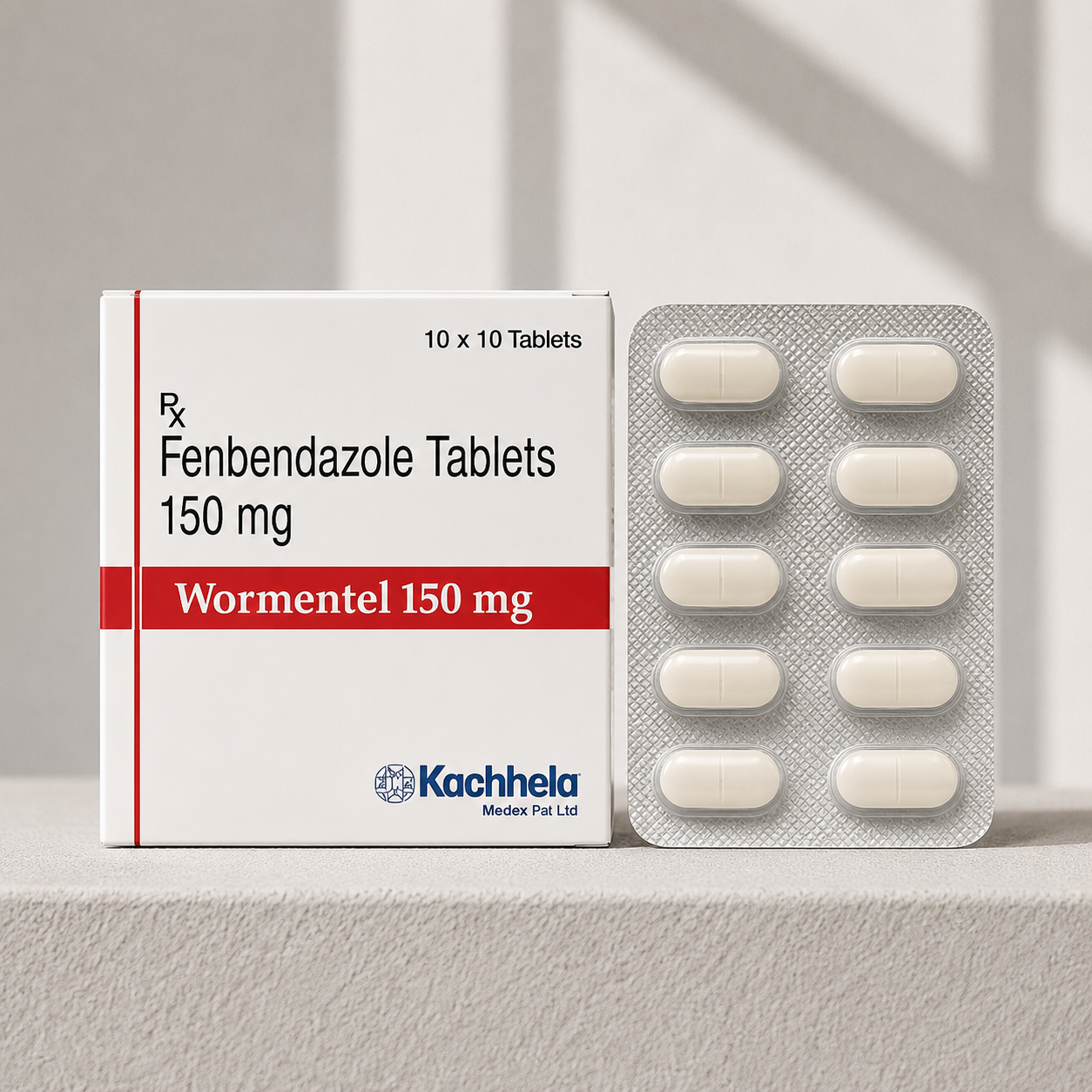
Fenbendazole 150 Mg at a Glance
Fenbendazole 150 Mg contains 150 mg of fenbendazole, a benzimidazole compound that has attracted interest because of its antiparasitic properties and ongoing scientific research into its biological effects.
Fenbendazole works primarily by interacting with tubulin and microtubule formation in susceptible organisms. This can interfere with important cellular processes such as nutrient utilization and energy metabolism.
What Is Fenbendazole 150 Mg?
Fenbendazole 150 mg is a formulation containing 150 mg of fenbendazole per tablet.
Fenbendazole belongs to the benzimidazole family of compounds. Its primary pharmacological activity involves interaction with tubulin, a structural protein that plays an important role in microtubule formation.
When fenbendazole interacts with parasite tubulin, microtubule formation can be disrupted. This can interfere with essential cellular functions and energy utilization.
The 150 mg designation simply indicates the amount of fenbendazole in one tablet.
💊 Active Ingredient: Fenbendazole
⚖️ Strength: 150 Mg
📋 Form: Tablet
🔬 Class: Benzimidazole compound
🧪 Research Area: Antiparasitic and cellular
Key Features of Fenbendazole 150 Mg
🔬 Research Interest
Fenbendazole has been investigated in laboratory research for its effects on several cellular pathways, including glucose metabolism, oxidative stress, and programmed cell death.
🧬 Benzimidazole Structure
Fenbendazole belongs to the benzimidazole group, a chemical family known for compounds that interact with tubulin.
💊 150 Mg Strength
Each tablet contains 150 mg of fenbendazole, providing a clearly defined amount of the active compound.
🧪 Ongoing Scientific Investigation
Research continues to explore fenbendazole’s biological properties and how its metabolites behave in biological systems.
How Does Fenbendazole 150 Work?
Fenbendazole 150 primarily acts by interfering with tubulin and microtubule formation.
Microtubules are important structural components involved in many cellular processes. Fenbendazole binding to beta-tubulin can destabilize microtubules and interfere with processes such as nutrient uptake and cellular energy management.
The mechanism can be summarized as:
Fenbendazole → interacts with tubulin → microtubule function is disrupted → cellular processes are affected.
What Is Fenbendazole Used For?
Fenbendazole is best known for its antiparasitic properties.
Its scientific profile includes activity against susceptible parasitic organisms through disruption of tubulin and microtubule-dependent processes.
🔬 Research Applications
Published research has explored fenbendazole in areas including:
- Cellular metabolism
- Glucose utilization
- Oxidative stress
- Microtubule dynamics
- Apoptosis-related pathways
- Drug metabolism
How to Take Fenbendazole 150 Mg
Important product details include:
- 💊 150 Mg strength
- 📦 Tablet quantity
- 🏷️ Manufacturer information
- 📋 Product specifications
- 📅 Expiration information
- 🌡️ Storage requirements
Do not assume that a particular amount is appropriate simply because the tablet contains 150 Mg.
Fenbendazole 150 Mg Dosage Information
This is particularly important because the amount of a compound that produces a particular biological effect can vary according to factors such as:
- Body weight ⚖️
- Age
- Metabolism
- Other medicines
- Individual biological differences
- Duration of exposure
For this reason, a product page should describe 150 Mg as the tablet strength, rather than presenting it as a standardized human treatment dose.
Fenbendazole 150 Mg vs Other Strengths
Fenbendazole products may be offered in different strengths depending on the formulation.
| Strength | Fenbendazole Per Tablet |
|---|---|
| Fenbendazole 100 Mg | 100 mg |
| Fenbendazole 150 Mg | 150 mg |
| Fenbendazole 222 Mg | 222 mg |
| Fenbendazole 500 Mg | 500 mg |
Possible Side Effects
Available literature has raised concerns about the safety of fenbendazole exposure in humans because human safety information is limited.
Potential concerns may include:
- Digestive discomfort
- Nausea
- Changes in appetite
- Abnormal liver enzyme levels
- Liver-related adverse effects
Safety Precautions & Warnings
Fenbendazole deserves particular caution because the available human research base is limited.
Before considering the product, important factors include:
- Existing liver conditions
- Other medicines or supplements
- Previous reactions to benzimidazole compounds
- Pregnancy or breastfeeding
- Duration and amount of exposure
Who Should Avoid Fenbendazole 150 Mg?
Extra caution is appropriate for individuals who:
- Have existing liver problems
- Take multiple medicines
- Have experienced reactions to related compounds
- Are pregnant or breastfeeding
- Are considering prolonged use
- Are considering fenbendazole based solely on laboratory or social-media claims
Drug Interactions
Fenbendazole undergoes metabolism involving several liver enzymes, and laboratory research has identified enzymes involved in its metabolic pathways.
Because of this, interactions with other substances are an important consideration.
Products that may warrant particular attention include:
- 💊 Over-the-counter medicines
- 🌿 Herbal supplements
- 🧪 Other compounds affecting liver metabolism
Anyone considering use alongside other medicines should take potential interactions seriously.
Available Strengths & Pack Sizes
Fenbendazole products can be available in different strengths and package configurations.
Common strengths may include:
- Fenbendazole 150 Mg
- Fenbendazole 222 Mg
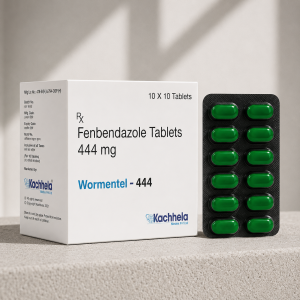
- Fenbendazole 444 Mg
- Fenbendazole 500 Mg
Storage Instructions
Store Fenbendazole 150 Mg according to the instructions provided with the specific product.
General storage considerations include:
- 🌡️ Keep at the temperature stated on the packaging.
- 💧 Protect from moisture.
- ☀️ Avoid excessive heat and direct sunlight.
- 📦 Keep in the original packaging when possible.
- 👶 Keep out of reach of children.
- 📅 Do not use after the expiration date.
Always follow the storage conditions printed on the product.
Frequently Asked Questions
1. What is Fenbendazole 150 Mg?
Fenbendazole 150 Mg is a formulation containing 150 mg of fenbendazole per tablet. Fenbendazole belongs to the benzimidazole family of compounds.
2. How does Fenbendazole work?
Fenbendazole interacts with tubulin and can disrupt microtubule formation in susceptible parasites.
3. What is Fenbendazole being researched for?
Research has investigated fenbendazole’s effects on cellular metabolism, glucose utilization, oxidative stress, microtubules, and apoptosis-related pathways.
4. Is 150 Mg the standard amount for everyone?
No. 150 Mg describes the amount contained in one tablet, not a universal amount suitable for every individual.
5. Can Fenbendazole affect the liver?
Liver-related adverse effects have been reported in people who self-administered fenbendazole, including a published case of severe drug-induced liver injury.
6. What are the possible side effects?
Possible concerns include digestive symptoms and changes in liver enzymes. More serious liver injury has also been reported in a human case.
7. Can Fenbendazole interact with other medicines?
Potential interactions are possible because fenbendazole undergoes metabolic processing involving liver enzymes.
8. What is the difference between Fenbendazole 100 Mg and 150 Mg?
The 100 Mg tablet contains 100 mg, while the 150 Mg tablet contains 150 mg of fenbendazole.
9. How should Fenbendazole 150 Mg be stored?
Follow the storage instructions provided with the specific product. Protect the tablets from excessive heat, moisture, and direct sunlight.
10. Is Fenbendazole the same as Ivermectin?
No. Both are antiparasitic compounds, but they belong to different chemical groups and work through different primary mechanisms.
Jadi Norris –
I had a question about my Fenbendazole 150 Mg order, and the Ivermectin World support team was helpful and responsive. Good overall experience.